Search
  Client portals
  020 3727 6666

Could an ISA really grow to £1 million? With enough time, regular investing and a disciplined plan, it’s possible, although never guaranteed. This article explains the habits that can help investors build long-term ISA wealth, from using allowances and harnessing compound growth to staying diversified through market ups and downs. An example shows how investing £20,000 a year at 5.5% annual growth could reach £1 million in about 30 years.
So, what is an ISA millionaire?
Becoming an ISA millionaire might sound out of reach. But for many investors, it’s a realistic long term goal.
It’s not about luck or finding the perfect investment. It’s about building good habits and sticking to them over time.
An Individual Savings Account (ISA) is one of the simplest ways to do this. It gives you tax efficient growth, flexibility, and a clear framework for saving.
So, how do you give yourself the best chance of getting there?
Start with what you can control
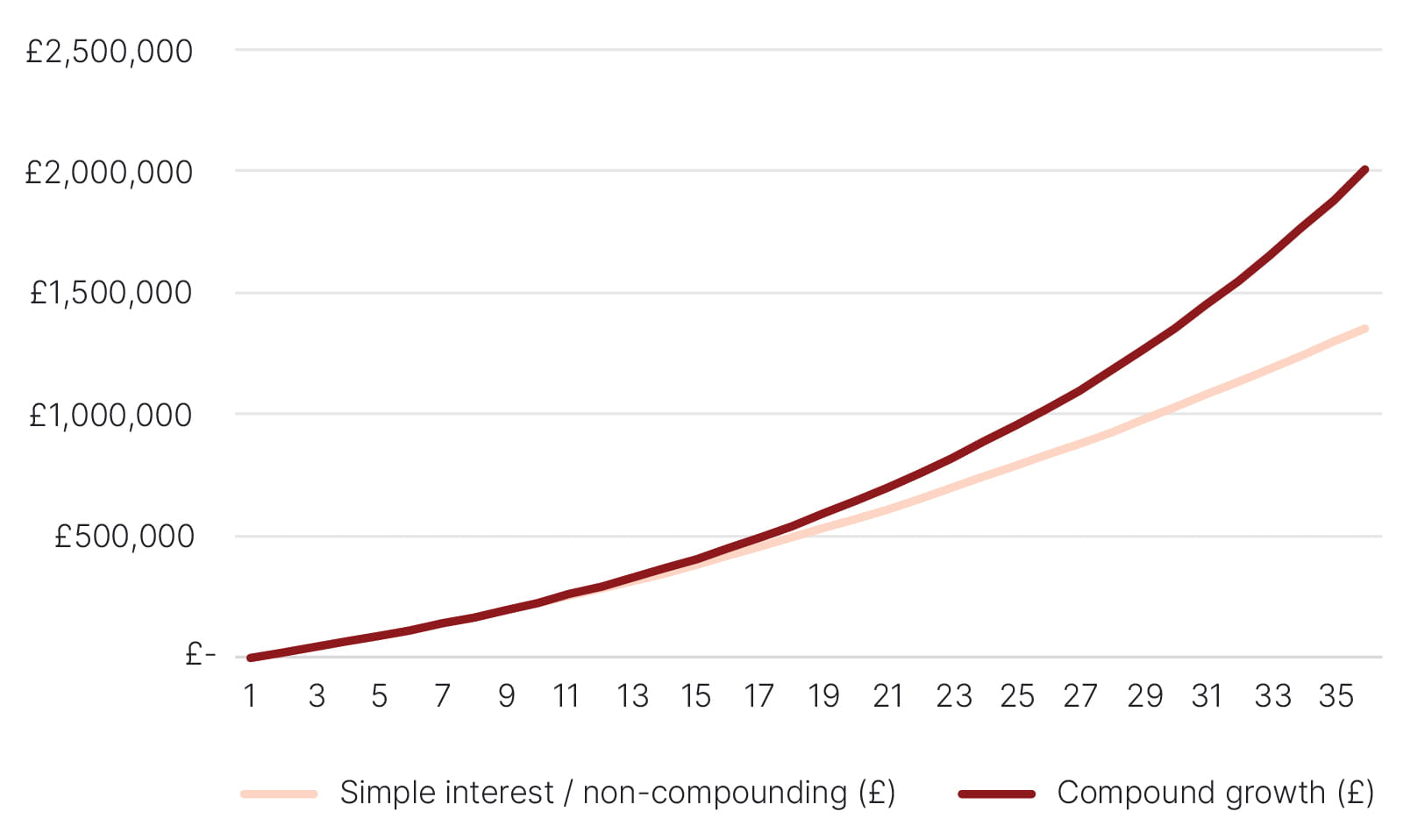
Compounding is one of the most important ideas in investing. It means your returns start to earn returns of their own.
How long could it take to become an ISA millionaire?
Source: 7IM
If you invested £20,000 a year into a stocks and shares ISA and achieved annual growth of around 5.5%, you could reach £1 million in about 30 years.
This example assumes contributions are made each year and that returns are compounded at a steady annual rate. It doesn’t reflect the ups and downs of markets, where returns can vary from year to year and you may get back less than you put in. It also doesn’t allow for fees, inflation or changes to tax rules. The 2026 to 2027 adult ISA allowance is £20,000.
The key factor? Time. The longer your money stays invested, the more chance it has to grow.
At first, progress can feel slow. But over time, growth often speeds up. Gains build on earlier gains, and the effect becomes stronger.
Starting early helps. So does investing regularly. While waiting to build up a large lump sum may mean missing years of potential growth.
Stay invested – especially when it feels hard
Markets don’t move in a straight line. There’ll be ups and downs along the way.
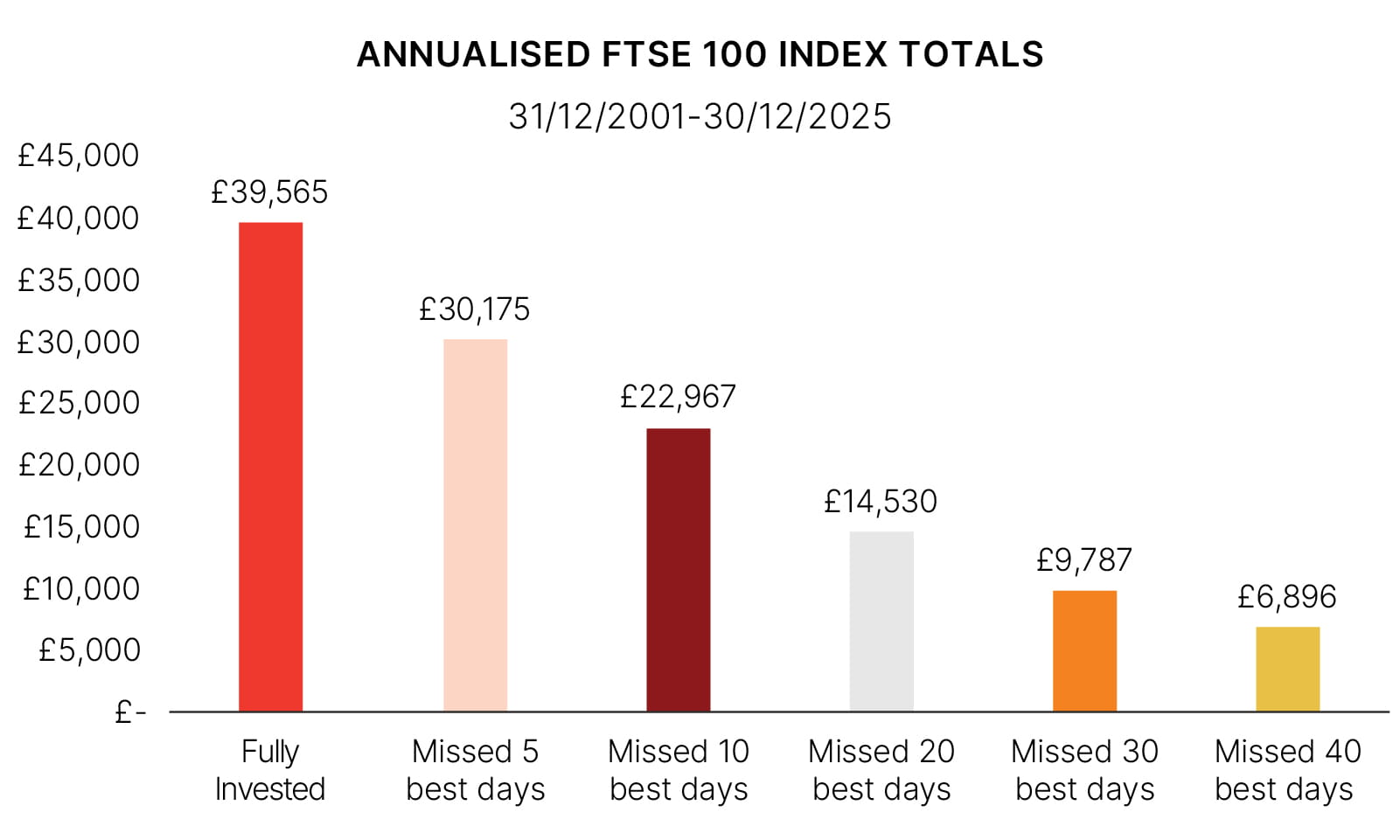
When things get tricky, it can feel safer to move out of investments. But this can do more harm than good.
Source: 7IM and Factset
Some of the best market days happen soon after the worst ones. So, if you step out at the wrong time, you might miss the recovery.
Trying to time the market is very difficult. Staying invested, even during uncertain periods, often leads to better long-term results.
A steady approach can help you stay focused when markets feel unsettled.
Stay diversified
It’s easy to be drawn to popular investments or market trends. But these don’t always last.
By the time an investment becomes widely known, much of the growth may’ve already happened.
Source: 7IM. For illustrative purposes only. Graph based on WOLFGANG DROBETZ AND FRIEDERIKE KÖHLER, The Contribution Of Asset Allocation Policy to Portfolio Performance, pp. 219-233, in: Financial Markets And Portfolio Management, Volume 16, Number 2, 2002.
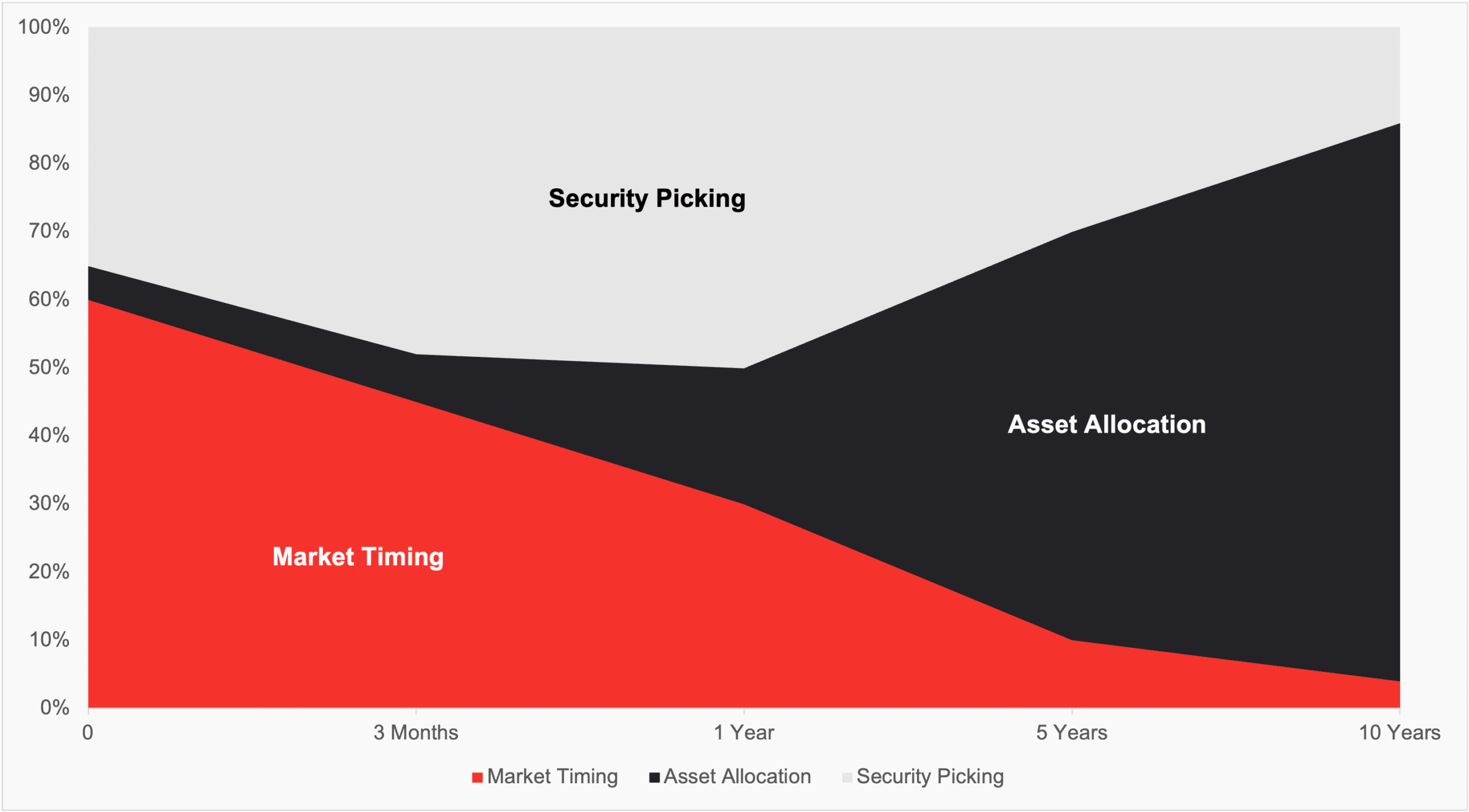
Instead of relying on one stock or one idea, spreading your investments can reduce risk. This is known as diversification.
A well-diversified portfolio includes different asset types, regions and sectors.
Over the long term, how you spread your money matters a great deal. It often has a bigger impact than picking individual investments.
Well known success stories can be appealing. But they’re hard to predict in advance.
A balanced approach can help you make steadier progress over time.
Follow a clear plan
A simple plan can make investing easier to manage.
This might include:
- Setting clear long term goals
- Investing regularly
- Keeping a balanced portfolio
- Reviewing your progress from time to time
It also means avoiding quick decisions based on short term news.
You don’t need to react to every market move. A calm, long term approach can help you stay on track.
The bigger picture
Becoming an ISA millionaire doesn’t need perfect timing. Instead, it often comes down to simple habits:
- Start as early as you can
- Invest regularly
- Stay invested
- Keep your investments diversified
- Follow a clear plan
There are no guarantees in investing. But these steps can improve your chances of reaching your long term goals.
Key takeaways
- Becoming an ISA millionaire is usually a long-term goal, not a quick win.
- Regular investing and compound growth can make a big difference over time.
- Staying invested through market ups and downs can help you avoid missing recoveries.
- Diversification can reduce the risk of relying on one company, sector or region.
- Returns are not guaranteed, and tax rules can change.
FAQs
What’s an ISA millionaire?
An ISA millionaire is someone whose ISA savings and investments are worth £1 million or more. This is usually built over many years through regular contributions, investment growth and the benefits of tax-efficient saving.
How long does it take to become an ISA millionaire?
It depends on how much you invest, how long you stay invested and the returns you receive. As an illustration, investing £20,000 a year with annual growth of around 5.5% could reach £1 million in about 30 years. But returns aren’t guaranteed.
Can you become an ISA millionaire with a stocks and shares ISA?
Yes, it is possible. A stocks and shares ISA gives your money the chance to grow over the long term. But investments can fall as well as rise, so there’s no guarantee you’ll reach £1 million.
Do you need to use the full ISA allowance every year?
Using more of your ISA allowance can help, because it gives more of your money the chance to grow tax-efficiently. But you should only invest what you can afford and keep enough money available for your short-term needs.
Is becoming an ISA millionaire guaranteed?
No. Investment returns are not guaranteed, and markets can be volatile. Becoming an ISA millionaire depends on your contributions, investment performance, fees, tax rules and the length of time you stay invested.
Is it better to invest monthly or as a lump sum?
Both can work. Investing monthly can make it easier to build a habit and spread contributions across different market conditions. A lump sum gives more money more time in the market, but it may feel harder during periods of volatility.
Important information
This article is for general information only and is not financial advice or a personal recommendation.
The value of investments, and any income from them, can fall as well as rise. You may not get back the full amount you invest. Past performance is not a reliable guide to future returns.
Tax rules depend on your individual circumstances and may change. ISA eligibility and benefits depend on current UK legislation.
Investing over the long term does not guarantee a positive return. Markets can be volatile and values can change quickly.
Any examples are for illustration only and are not a recommendation to buy or sell a specific investment.
If you’re not sure what’s right for you, you should seek professional financial advice.
Sam Hannon
Investment Manager, 7IM
0203 823 8637
Sam.Hannon@7im.co.uk